 ProductIndex
QIDI Q2 3D Printer (Q2)
ProductIndex may earn a commission from qualifying purchases made through links on this site.
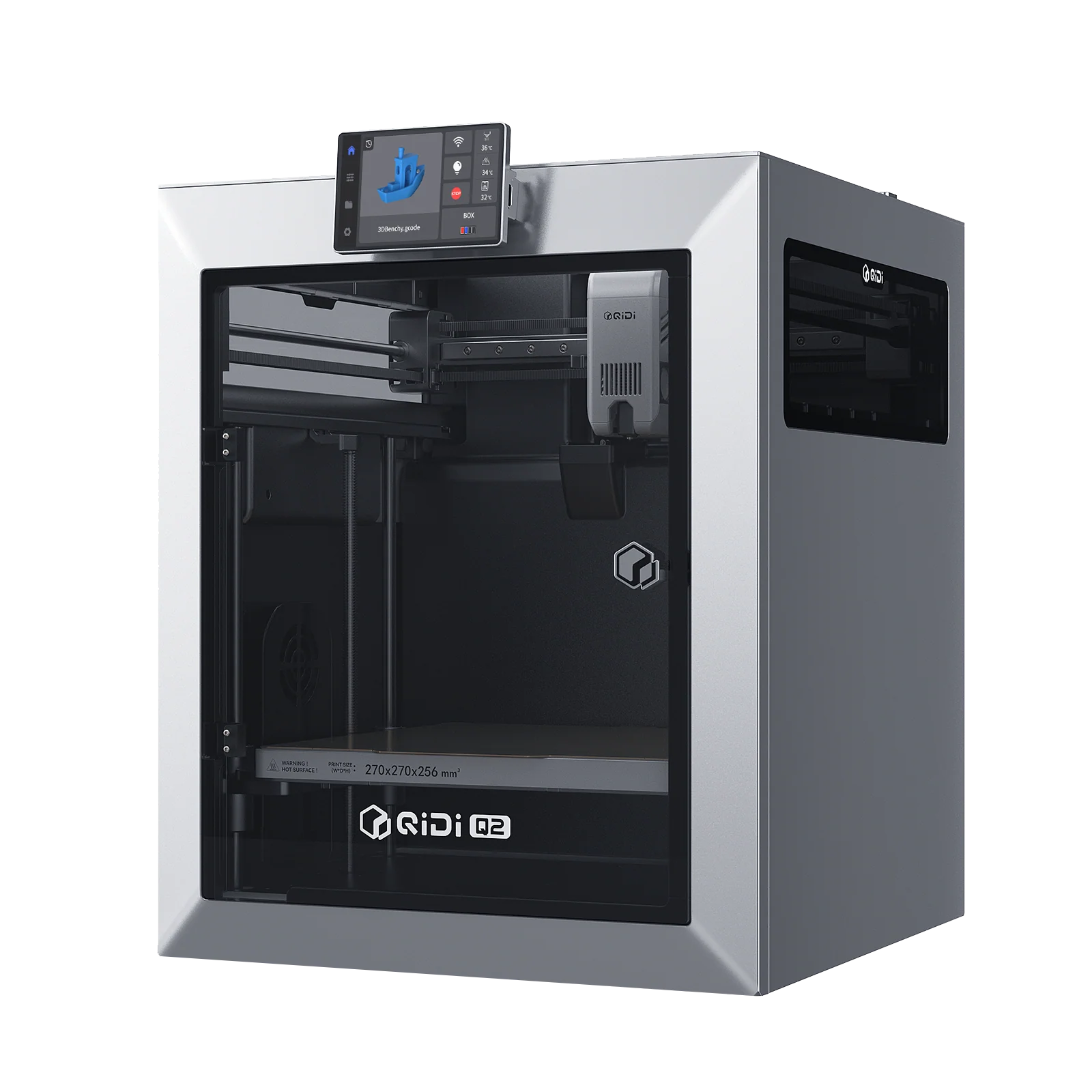
© QIDI. Used with permission.
One-line verdict
The QIDI Q2 is a fast, enclosed FDM printer that handles engineering filaments out of the box but is held back by inconsistent firmware polish and occasional component quality issues.
How it compares
- vs Bambu Lab P1S ($500–$600): QIDI Q2 wins on price and out-of-box engineering filament support; P1S wins on firmware polish, print consistency, and ecosystem maturity
- vs Creality K1C ($400–$480): QIDI Q2 wins on engineering filament capability and enclosure build quality; K1C wins on price and Creality ecosystem support
- vs Creality Hi Combo ($450–$550): QIDI Q2 wins on engineering filament support and enclosure quality; Hi Combo wins on beginner-friendly software and setup guidance
- vs ELEGOO Saturn 4 Ultra 16K ($450–$550): QIDI Q2 wins on material versatility and no post-processing requirement; Saturn 4 Ultra wins on fine detail resolution for resin applications
- vs Creality K1 SE ($450–$550): QIDI Q2 wins on enclosed engineering filament support and enclosure quality; K1 SE wins on open-frame accessibility and price
AI-summarized review themes
Frequently Praised
- Strong value for the price, often compared favorably to Bambu Lab machines
- Enclosed design allows reliable ABS, PETG, and carbon-fiber prints with minimal warping
- Klipper-based firmware enables fast speeds and macro-level tuning for experienced users
- Responsive customer support sends replacement parts quickly and without hassle
- Fully assembled out of box, network connection and first prints are straightforward
- QIDI Box accessory enables multi-color or multi-material filament switching
Frequently Criticized
- Firmware and UI feel half-finished, with mixed English/Chinese text and limited controls
- Occasional build-quality issues, especially around the front glass door and small fasteners
- Print-quality consistency varies, some users report nozzle-heater errors or cooling failures
- Slicer software is functional but lacks advanced monitoring or cloud features found in competitors
Best for
Engineering filament work, enclosed home or office use, prosumer upgrades from basic printers
Not for
Complete beginners wanting plug-and-play polish, users needing flawless UI or extensive cloud tools
Data sources
- Estimated ~8 purchase reviews via Amazon, Amazon aggregated review insights (8 attributes, 160 review mentions)
- Review period: 2025–2026
- Sentiment confidence: medium
Specifications
| Technology | FDM, Klipper-controlled |
|---|---|
| Enclosure | Fully enclosed with active filtration |
| Max Nozzle Temp | 300 °C |
| Max Bed Temp | 120 °C |
| Build Volume | 250 × 250 × 250 mm |
| Multi-material | QIDI Box accessory |
| Speed | Up to 500 mm/s advertised, real-world ~200-300 mm/s |
| Bed Leveling | Automatic probe with Z-offset calibration |
| Connectivity | Wi-Fi, USB, LAN |
| Weight | ~18 kg |